Showing posts with label Dairy Products. Show all posts
Learn Cheesemaking in 6 Easy & Important Steps
Posted by Unknown in Cheese, Cheese Making, Dairy Products on Saturday, 26 January 2013

Making
cheese is both an art and a science. Cheesemakers rely as much on
measurements of pH levels and inoculations of specific molds as they do
their own senses of sight, touch and smell. While the recipes for all
cheeses vary, the following six steps outline the basic process of
turning milk into cheese.
1) Acidification:
Starter culture is added to milk to change lactose (milk sugar) into
lactic acid. This process changes the acidity level of the milk and
begins the process of turning milk from a liquid into a solid.
2) Coagulation: Rennet is added to further encourage the milk to solidify.
3) Curds and Whey: Curds
are cut using a knife or a tool that resembles a rake. Cutting the
curds further encourages them to expel liquid, or whey. Generally, the
smaller the curds are cut, the harder the resulting cheese will be. Soft
cheeses like Camembert or Brie are hardly cut at all. Harder cheeses
like Cheddar and Gruyere are cut into a very fine texture. For these
harder cheeses the curds are further manipulated by cheddaring and/or
cooking. Cooking the curd changes its texture, making it tender rather
than crumbly.
4) Salting: Salt
adds flavor and also acts as a preservative so the cheese does not
spoil during long months or years of ageing. It also helps a natural
rind to form on the cheese. There are several ways to use salt. Salt can
be added directly into the curd as the cheese is being made. The
outside of the wheel of cheese can be rubbed with salt or with a damp
cloth that has been soaked in brine. The cheese can also be bathed
directly in vat of brine.
5) Shaping:
The cheese is put into a basket or a mold to form it into a specific
shape. During this process, the cheese is also pressed with weights or a
machine to expel any remaining liquid.
6) Ripening
Referred to as affinage, this process ages cheese until it reaches
optimal ripeness. During this process, the temperature and humidity of
the cave or room where the cheese ages is closely monitored. An
experienced affineur knows how to properly treat each cheese so it
develops the proper flavor and texture. For some cheeses, ambient molds
in the air give the cheese a distinct flavor. For others, mold is
introduced by spraying it on the cheese (brie) or injecting it into the
cheese (blue cheese). Some cheeses must be turned, some must be brushed
with oil, and some must be washed with brine or alcohol.
Uncountable Benefits of Goat's Milk
Posted by Unknown in Dairy Products, Goat, New Zealand, Raw Milk on Friday, 25 January 2013
John Maslin

Phil and Bryanne Weber aren't given to blasphemy, but they swear by goat's milk.
They
have a lifestyle block on Mosston Rd and milk a herd of 50 goats twice
daily. While the family takes what it needs, the bulk of the raw milk is
fed to calves.
Now
they are watching with interest the next move from the Ministry of
Agriculture and Forestry (MAF), which is seeking the public's views on
whether to continue farm-gate sales of raw milk.
Current
regulations let farmers and people like the Webers sell a daily maximum
of 5 litres of raw milk per person from their farm gate.
"The
idea of being able to sell from our gate has real appeal as long as the
Ministry doesn't put to many regulations in our way," Mr Weber said.
But the Webers want to educate the public about raw goat's milk and its benefits.
"The
interest in getting the milk is there but a lot don't understand its
values," Mrs Weber said. "It's far superior to cows' milk and is great
for people who have all sorts of allergies."
With
that many goats, the family has never had to buy milk from the
supermarket and, having tasted store-bought milk, she said she could
never drink it.
The Weber farm is a hobby farm, so they were not reliant on the milk as their staple income.
Their
family of seven sons and a daughter have all been brought up drinking
the raw goat's milk and their parents say they are so healthy, the
doctors don't even know them.
"Their
teeth are perfect. While Phil and I have got a mouthful of fillings,
the children have hardly a filling among them," Mrs Weber said.
Mr
Weber can attest to the values of the milk, too, because as a child he
suffered from severe eczema: "I scratched myself constantly, and the
doctor told my mum to get me on to goat's milk. She bought a goat and
once I started drinking its milk everything came right. So when our
family came along, we decided to have a goat and the herd's just grown."
Goat's milk is known to have less fat, less lactose, fewer allergens, different proteins and more minerals than cow's milk.
"There
has been a recent study done by scientists at Massey University which
looked into the dangers of consuming raw cows' milk. That study showed
there was very little risk because of today's hygiene standards in
milking sheds and the general health status of farm animals," Mrs Weber
said.
GATE SALES
MAF
called for submissions on whether to continue farm-gate sales of raw
milk and these have now closed. Current regulations let farmers sell a
daily maximum of 5 litres of raw milk per person from their farm gate.
The three options proposed were:
to maintain the present legal position
to make some amendments to the conditions of sale and retain the requirement for a risk management programme (RMP)
to
make some amendments to conditions of sale, and exempt farmers from an
RMP for farm-gate sales but still require them to meet some animal
health and hygiene requirements and keep records of sales (this is MAF's
preferred option).
The Healthy Benefits Of Yogurt
Posted by Unknown in Dairy Products, Health Issues, Nutrition, Yogurt
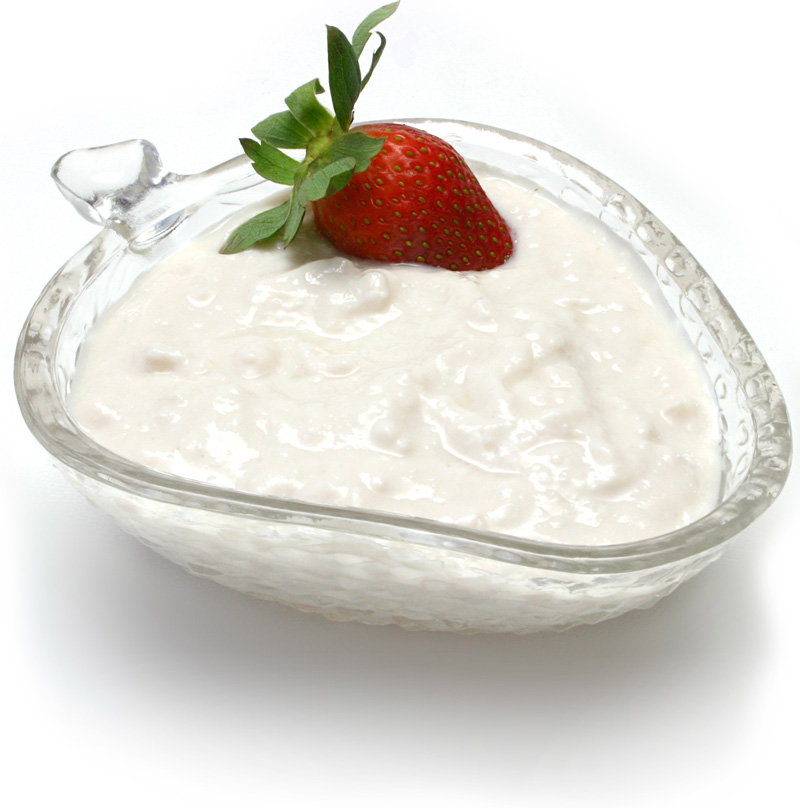
Yogurt
Eating
yogurt everday is very healthy for the body. For those looking to
supplement their protein, calcium and dairy, yogart is a healthy choice.
Yogurt
is not just a delicious snack with fruits on the bottom, it has great
health benefits. It is an excellent source of protein, calcium,
riboflavin and vitamin B 12. When yogurt is compared to milk, yogurt
contains more calcium and protein because of the added cultures in the
yogurt.
 Yogurt
must contain active and living cultures to be yogurt. Cultures are
composed of unique living microorganisms which are responsible for many
of the health and nutritional benefits of yogurt. Some of the health
benefits of yogurt are"
It
improves natural defense, it contains a good amount of phosphorus and
88% water. People with a risk of osteoporosis should eat at least one
serving of yogurt per day.
It has also been claimed that yogurt may protect against some types of cancer but more investigations have to be carried out.
There
are three types of yogurt: regular(whole milk), low-fat and skim.
Low-fat and skim yogurt are good for people who are on a cholesterol
lowering diet or just simply watching their weights. These types of
yogurt does not raise blood cholesterol levels.
Some
people have trouble digesting lactose, a carbohydrate in milk and milk
products, because of the deficiency of enzyme lactase in the body. Live
yogurt cultures produce lactase and break down the lactose. Yogurt is a
healthy way to get the calcium the body needs, for the people who can
not tolerate milk products.
Other
benefits of live and active cultures in the yogurt are, they may help
to boost the immune system. They encourage the right kind of bacteria to
multiply in the gut. These bacteria help to digest food and prevent
stomach infections. Also, they help to provide relief from vaginal
infections.
Yogurt
is fresh dairy product that must be stored in the refrigerator. The
heat treated yogurt has a longer shelf life but it does not give the
nutritional benefits like the yogurt with live cultures because heat
processing destroys the cultures. To get the most health benefit from
yogurt, there must be a live and active cultures seal on the label.
Yogurt
is known and consumed in almost all parts of the world. Mediterranean
Countries use a lot of yogurt in their cuisine. They usually eat yogurt,
plain with no sugar along with main dishes like stuffed cabbage and
spinach. They add yogurt to their salads or use it to make traditional
"meze" They also prepare yogurt drinks made with plain yogurt, salt and
water and serve it with shish kebabs. Fried vegetables such as eggplant
or zucchini are eaten with yogurt. Cucumber and yogurt salad is very
popular among the Mediterranean countries, it is prepared with yogurt,
cucumbers, fresh or dried mint, garlic and salt.
To add more yogurt to everyday diet, here are some healthier alternatives and tips:
- Replace mayonnaise and salad dressings with yogurt
- Replace ice cream and milkshake with frozen yogurt and mixed fruit yogurt smoothie
- Make dips with yogurt instead of sour-cream
- Try using yogurt cheese instead of cream cheese
- Use to marinate meat and poultry
- Yogurt can also be stove cooked, but it will curdle if heated to too high a temperature or boiled. Adding a tablespoon of cornstarch into each cup of yogurt before cooking it, can prevent this problem.
Riding herd on goats
Posted by Unknown in Cheese, Cheese Making, Dairy, Dairy Products, Goat, Success Stories, USA on Monday, 10 September 2012
Leslie Cooperband, a Boston native who holds a Ph.D. in soil science, had a secret passion.
And it didn't have anything to do with soil.
She wanted to be a cheesemaker.
 |
| Wes Jarrell pulls down a brance of a maple tree so the goats can get the leaves. |
After Cooperband and her husband, Wes Jarrell, bought a home and farmland in rural Champaign, they said, "Let's do goats," Cooperband recalled.
About a year and a half after deciding to go ahead with the project – buying the goats, modifying a barn according to state regulations, installing a milk parlor and commercial facility for making the cheese and being certified Grade A by the USDA – they are now selling the soft cheese to area restaurants and direct to consumers at Urbana's Market on the Square.
"A lot of people told me I was crazy to do this," said Cooperband on a recent morning while adding sea salt to a batch of fresh cheese.
But she's taken with the goats and they are obviously crazy about her and Jarrell.
After they stepped outside into the yard to say hello to the goats, the does ran over, pushing their heads up for a rub behind the ears or a scratch under their chins. Jarrell and Cooperband were happy to oblige.
"I love goats. They're so friendly," Cooperband said. When Jarrell pulled down a branch from a Norway maple tree, the goats zoomed over to him, standing on their hind legs to get at the leaves.
East Central Illinois – all of Illinois for that matter – is not exactly a hub for dairy goat operations, let alone cheesemaking.
Most people in the state who own dairy goats have them for their own use or for shows, said Saybrook resident Richard Hudson, secretary and treasurer of the Illinois Dairy Goat Association.
The larger commercial operations tend to be in dairy states like Wisconsin and California.
But there are a growing number of goats around.
According to the most recent Census of Agriculture in 2002, Illinois had 425 farms with dairy goats for a total of 5,685 goats in the state. That's up from 369 farms and 3,728 dairy goats in 1997.
And Illinois is not the only state where the goat population seems to be increasing. From 1997 to 2002, the inventory of dairy goats in the entire U.S. increased from 190,000 to 290,000, also according to the Census of Agriculture.
That increase may be due to rising demand for goat's milk and cheese and the growing movement to buy locally produced food.
Or it may also be because the government is now able to find the farms with goats and the records are more accurate, said Penny Gioja, who raises dairy goats with her family near Bondville.
The Giojas have been raising goats for 10 years and got into the whole thing because they wanted a fresh supply of milk for their family to drink, Gioja said. They have about 10 goats in the winter and 30 in the spring. When the Giojas sell their milk, it is directly off the farm to customers, rather than at farmers' markets or elsewhere.
Goat's milk is white and high in butter fat, plus it contains vitamin B-6, A, potassium, niacin and other minerals. Many people who are allergic to cow's milk can drink goat's milk, Cooperband said.
"It's much easier to digest and if you properly cool and preserve goat's milk, it's delicious," Hudson said.
Goat's milk is naturally homogenized so you can't make butter and cream as easily as from cow's milk, Gioja said.
But you can, and the Giojas have, made soft and hard cheese, yogurt, ice cream and kefir (a creamy drink) out of it.
"There are a lot of uses for the milk," Gioja said.
Cooperband and Jarrell have 22 dairy goats, including one male, a buck. Eventually they would like to add more goats.
A goat's lactation cycle is between 275 and 300 days, from around March to late November or early December.
During those months, Cooperband and Jarrell begin each day by milking the goats at 6:30 a.m. They milk six at a time and the whole process takes an hour.
"They're usually waiting and while you're with the first batch, the next batch is poking their heads around the corner waiting for their turn," Cooperband said.
The next milking is at 6 p.m.
"I like the routine of milking. It's a time when you see how they're doing. I like it more than I thought I would," Cooperband said.
After they milk the goats, the milk is transferred to a holding tank, where it is chilled and stored for three to five days. The milk is then pumped via pipeline to another room where it is sent to a tank and pasteurized.
"The system was set up so there's no exposure to air and potential for contamination," Jarrell said.
About 21 to 22 gallons of milk will make 40 pounds of cheese.
After pasteurization, they will scoop out the cheese, measure the acidity and place the cheese into muslin cheese cloths. Then they put the cheese in plastic shopping carts where they drain up to 12 hours.
Afterward, they take out the cheese and add sea salt. After the salt is mixed in, Cooperband tastes the cheese.
"That's where the art comes in," Jarrell said.
Some of the cheese is mixed with herbs de Provence (thyme, rosemary and other herbs). Other cheese is placed into French molds and covered with parchment.
In between raising the goats and making cheese, Jarrell and Cooperband also have planted about 350 fruit trees and 800 berry bushes. They plan to transition the land to organic.
And in between those activities, both work at the University of Illinois. Jarrell, also a soil scientist, is head of the Department of Natural Resources and Environmental Sciences in the College of Agricultural, Consumer and Environmental Sciences. Cooperband is a UI Extension specialist in sustainable agriculture.
Christine Des Garennes


